

2K Wood Oils - What's the Story
Is a 2K Oil the Right Finish for My Project
Most wood finishes look perfect on the day they’re applied. The colour deepens, the grain becomes richer and the surface keeps the warm feel that makes real timber such an appealing choice.
For many pieces of furniture, a quality oil or hardwax oil is more than adequate protection.
Bookcases, cabinets and lightly used tables can stay looking good for years with only occasional care.
But heavily used surfaces live a different life.
Dining tables are wiped several times a day, kitchen worktops meet water and detergents constantly, and busy households introduce heat, alcohol and food spills on a daily basis. Over time these conditions can leave visible wear long before the wood itself is damaged. Certain cleaning regimes/products can also be particularly detrimental when constantly repeated.
At that point the question changes — not how to finish the wood, but how to keep the natural look I want while increasing resistance.
This is where reactive (2K) oils were developed to sit: between traditional oils and full film finishes, combining the appearance of one with the durability of the other.
What Is a 2K Wood Oil?
A 2K Oil is simply an oil finish supplied in two parts — the oil itself and a small amount of activator/catalyst that is mixed in before application.
Traditional oils dry by reacting slowly with air - so-called oxidative drying. A reactive oil cures differently. Once mixed, a chemical reaction begins., and as oils are designed to penetrate beyond the surface they soak into the wood fibres and harden throughout the surface and sub-surface rather than only at the top.
In practical terms this changes how the finish behaves. Instead of remaining relatively soft and relying on periodic re-application, the cured oil becomes far more resistant to liquids, cleaning and daily handling while still ensuring your timber looks and feels natural.....after all thats why you chose timber!
There is no thick surface layer and no plastic-looking coating. The grain remains open and tactile,
but the protection is significantly increased.
The goal is not to replace traditional oils, but to extend the situations where an oiled appearance can be used with confidence — particularly on surfaces that receive constant use.
Where One Coat 2K Oil Fits
Borma One Coat 2K Wood Oil sits within this reactive oil category, designed for surfaces that receive regular, practical use rather than occasional contact.
It allows your timber to keep a natural, matte appearance (although it can be buffed to increase the sheen if preferred) while improving resistance to everyday wear. The “one coat” approach reflects how the product is intended to be used — applied thinly, worked into the surface and the excess removed, rather than built up in multiple applications.
In other words, it behaves more like a protective finish than a decorative film. The wood remains the visual focus, while the finish works quietly in the background.
This makes it particularly suited to tables, worktops and furniture that people actually live with, not just look at.
Advantages of One Coat 2K Oil
One Coat Means Less Work – saves valuable time and effort
Durable Protection Against Everyday Life – resistant to household liquids, fats, stains and heat
Keeps the Natural Look – maintain the beauty and tactile feel of the wood
Repairable & Low Maintenance – local touch-ups, spot repairs and freshen-ups are easy
Practical Choice for much-used Surfaces - confidence in performance
Where This Finish Works Best
Borma One Coat 2K is perfect for horizontal surfaces like tables, kitchen worktops, bar tops and even parquet where the surface comes into contact with everything life (or the kids and the dog) throw at it.
It isn't really the right choice for somebody wanting a gloss finish or is doing an exterior project or just want's to make the grain pop on a nice occasional piece of furniture - we have lots of oils and finishes at www.bormashop.co.uk more specifically suited to those scenario's.
Durability
2K Oils are tried and tested when it comes to excellent resistance to lot's of everyday household liquids like tea, coffee, ketchup, red wine (in the very unlikley event you allow yourself to spill it), alcohol and fats and oils like butter, olive oil and cooking oil all of which can be difficult to remove on less resistant surfaces.
Simple Application
Being an oil the application is comparatively simple and following some basic rules will mean you achieve the optimum result.
First, sand the wood with 120/150 grit sandpaper and remove all dust. Always sand with the grain rather than across it so as not to introduce scratch patterns Next, ensure the oil is thoroughly mixed and add the correct amount of catalyst.
Then apply with a white lint-free cloth, soft-tipped brush or White Scotch pad and 'massage' into the wood in circular motions. Think of it as feeding the wood. When the oil remains at the surface you know the sub-surface has been 'fed' so you can leave it to rest a few minutes and then remove all the excess with a fresh white lint-free cloth, starting in circular motions and finishing with the grain. You'll know you've removed all the excess when you can't smear the surface with your finger.
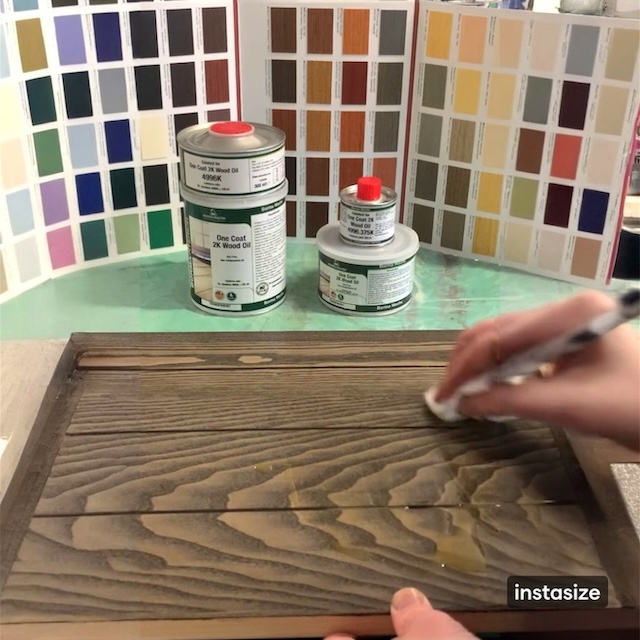
Now, keep the item in as dust-free an enviroment as possible with a decent ambient temperature ideally between 12C - 22C and with some air movement. Typically, it will be dry and cured in 8 hours but overnight is always a good guide.
So, a 2K Oil like Borma One Coat 2K is ideal for your finishing projects on table tops, kitchen work surfaces, bar tops, furniture and parquet, and indeed anywhere where you want a natural look with high performance.
Top Tips:
- Only mix/catalyse the amount you need for the job
- Don't apply like a paint film - and always remove any excess
- Dampen/soak oily rags in water before disposing
Comments
Leave your comment